ServicesTPO Roofing
TPO Roofing in Plainfield
Some parts of a house are too flat for shingles: the back porch, a sunroom addition, the roof over an attached garage. We install TPO, a single-ply membrane with heat-welded seams, so those sections shed water and stay sealed through every season.
What TPO is and when it makes sense
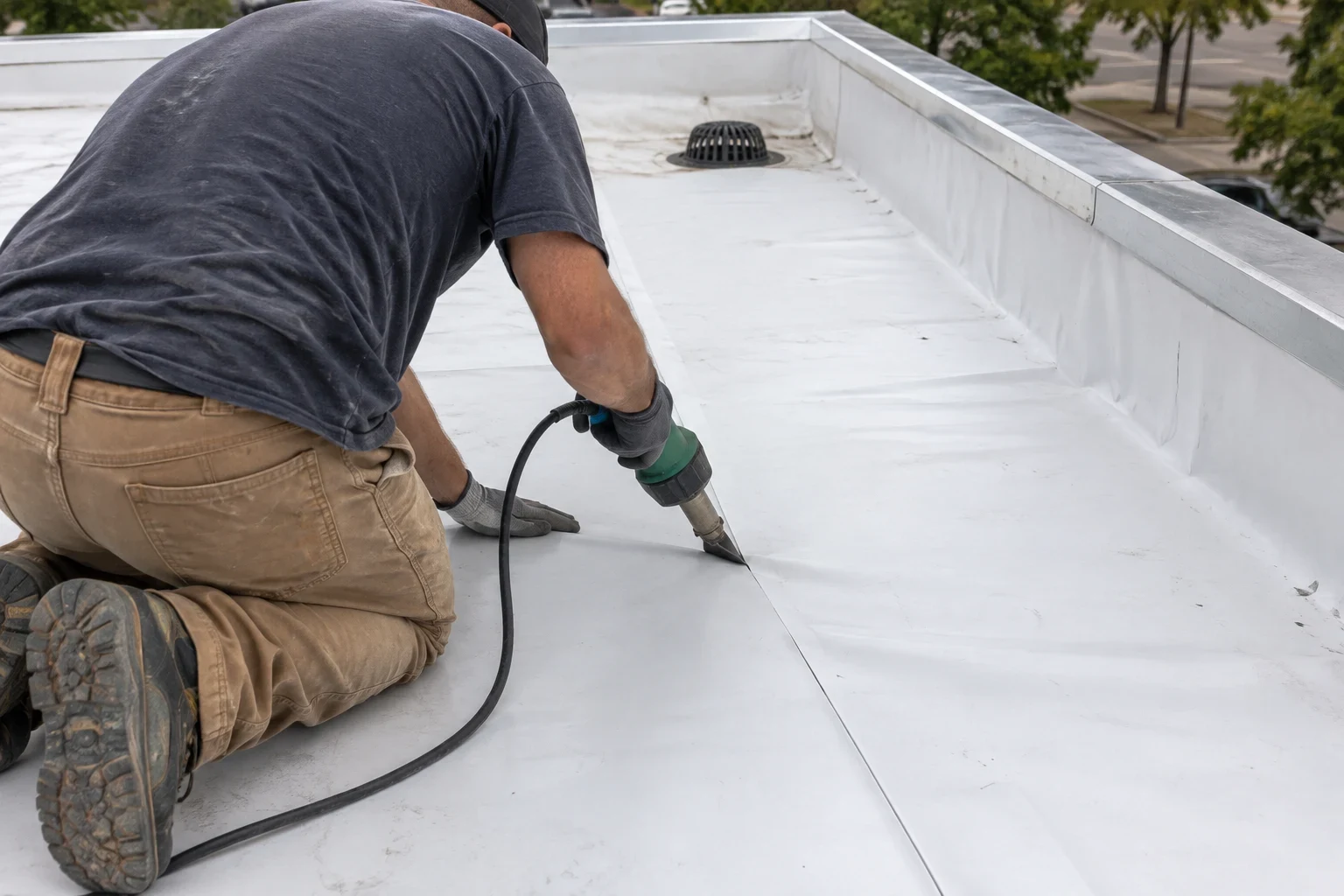
TPO stands for thermoplastic polyolefin. It arrives as wide rolls of flexible white sheet, and where two sheets overlap we melt them together with hot air. Once cooled, that seam is one continuous piece of material instead of a glued or taped joint.
Shingles rely on gravity. They overlap like scales and need enough pitch for water to run off before it can work its way underneath. On a roof that is nearly flat, water lingers, and shingles or old rolled roofing start to leak at the laps. A welded membrane does not depend on slope to stay watertight, which is why it suits low-slope sections of a home.
We will tell you plainly whether TPO is the right fit. If your roof has enough pitch for shingles, we say so and point you to our shingle roofing page instead.
What a TPO job includes
Tear-off down to the deck
We remove the old rolled roofing, tar layers or worn membrane so we can see the wood underneath. Soft or rotted decking gets replaced before anything new goes on.
Insulation and cover board
Rigid insulation boards go down first, sometimes tapered to steer water toward a drain or edge. A firm cover board on top gives the membrane a smooth, solid base you can step on.
Membrane and welded seams
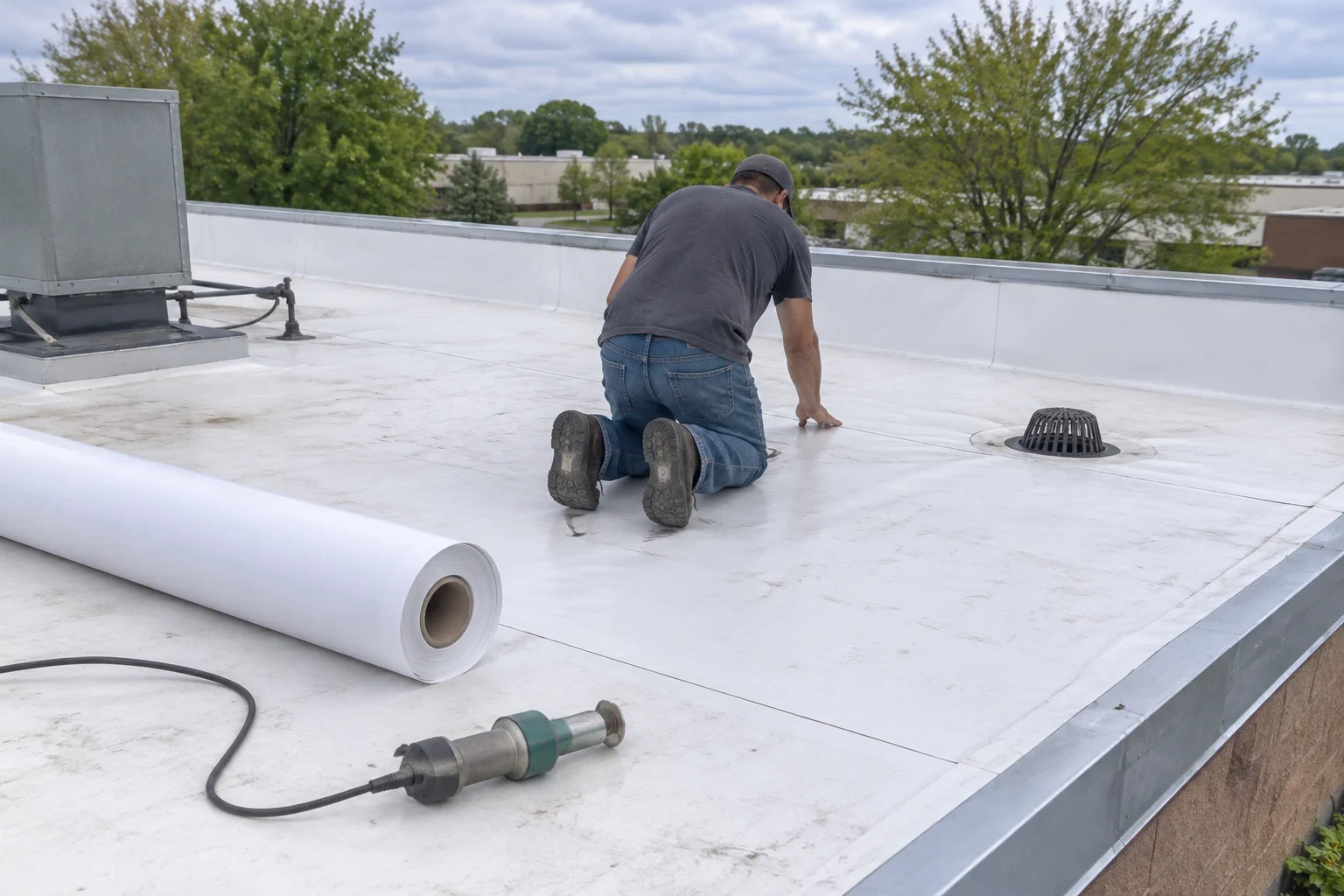
The TPO is either fastened through the boards or fully adhered, depending on the roof. Every seam is welded with a hot-air tool and then checked along its full length with a probe.
Wall and edge flashing
Where a low roof meets the siding or a taller roof, we run membrane up the wall and finish it with metal termination. Edges get matching drip metal so water drops cleanly into the gutters.
Penetrations sealed properly
Vent pipes, exhaust fans and skylight curbs each get prefabricated boots or welded flashing rather than a smear of sealant.
Signs a low-slope section needs attention
- Water that sits for days
- Small puddles after rain are common. Ponding that is still there two days later means the surface has sagged or drainage is blocked, and in winter that water freezes and works at every seam.
- Cracked or blistered rolled roofing
- Asphalt rolled roofing dries out in summer sun and splits along its laps. Blisters show where moisture is trapped underneath.
- Stains on the porch or sunroom ceiling
- A brown ring under a flat section usually points to a failed seam or flashing above, not a problem with the main roof.
- Shingles on a roof that is too flat
- Shingles installed below their minimum pitch tend to leak in wind-driven rain and during snowmelt, even when they look intact.
- Soft spots underfoot
- A spongy feel means the deck below has been wet for a while. That wood needs replacing before any new roof goes on.
How the work goes, start to finish
- 1
Inspection and a straight answer
We walk the roof, measure it, check drainage and press on the deck for soft areas. You get photos of what we found and an explanation of whether TPO, a repair or another material makes the most sense.
- 2
A written estimate
The estimate breaks the job into its parts: tear-off, deck repair allowance, insulation, membrane thickness and flashing. Each line has its own figure, so nothing is bundled out of sight, and we are glad to walk through any item that is unclear.
- 3
Install day
We protect plants, windows and walkways, then tear off and dry-in the same day so the house is never left open. Most porch and addition roofs are finished in a day or two.
- 4
Seam check and cleanup
Before we leave, every weld is probed, and we run a magnet sweep through the yard and driveway for nails. We walk the finished roof with you if you would like to see it.
What moves the price of a TPO roof
Most residential TPO jobs are modest in size, so the details carry more weight than the square footage alone. Here is what we look at when we write your estimate. Financing is available if you would rather spread the cost out.
- Deck condition
- Years of slow leaks often leave rotted plywood. How much needs replacing is the biggest unknown, and we show you photos before we price it.
- Layers to remove
- Some flat roofs have two or three old layers stacked up. Each one adds labor and disposal.
- Insulation and drainage
- Tapered insulation to fix ponding costs more than flat boards, but it solves the problem instead of covering it.
- Membrane thickness
- Thicker membrane holds up better to foot traffic and hail. We explain the difference and let you choose.
- Walls, vents and edges
- A simple rectangle is quick. A porch roof tucked against two walls with several vents takes more flashing and more time.
TPO roofing questions
- Is TPO only for commercial buildings?
- It is common on commercial roofs, but it works just as well on the flat and low-slope parts of a house. Porches, garages, dormers and rear additions are where we use it most. The main roof usually stays shingle or metal.
- Will a white roof look out of place on my home?
- Most low-slope sections cannot be seen from the street or the yard. White also reflects summer sun, which keeps the room underneath cooler. Gray and tan membranes are available where appearance matters more.
- Can you put TPO over my old roof?
- Sometimes, but we usually recommend tearing off. Going over old material hides wet decking and adds weight. If a layover is reasonable on your roof, we will explain the tradeoffs in plain terms.
- Can I walk on it?
- Yes, for occasional access such as cleaning gutters or servicing a vent. The cover board underneath gives it a firm surface. If you plan to use it often, we can add walkway pads where you step.
- How does it hold up through Indiana winters?
- Welded seams do not loosen with freeze and thaw the way glued laps can. Good drainage matters most, since standing water that freezes is hard on any roof, so we plan the slope and edges with that in mind.
Find out what your flat roof needs
We will look at the low-slope sections of your home, show you photos and explain your options without pressure. We work in Plainfield, Avon, Brownsburg, Danville and nearby towns.