ServicesStorm Damage Repair
Storm Damage Repair in Plainfield, IN
After hail or high wind, the damage on a roof is often hard to see from the ground. We walk the roof, photograph what the storm did, and explain in plain terms what needs repair, what can wait and how the insurance side works.
What storm damage repair covers
Storm damage repair restores the parts of your roof that a single weather event broke. That means shingles bruised or cracked by hail, tabs torn off by wind, flashing lifted at a chimney, and gutters dented or pulled loose. It is different from wear. A twenty-year-old roof shedding granules everywhere is aging. A roof with round dark spots on one slope after a June storm has been hit.
That difference matters, because insurance policies generally cover sudden damage and not age. Our job is to show you which is which, with photos, so you decide with clear information in hand. If the damage is limited, a repair is the right call. If hail has bruised most of the shingles, we will say so plainly and explain why a roof replacement may be the better use of your money.
Spring and summer thunderstorms across central Indiana bring both hail and straight-line wind, so we often find both kinds of damage on the same roof and document each one separately.
What the work includes
- Photographed inspection, slope by slope
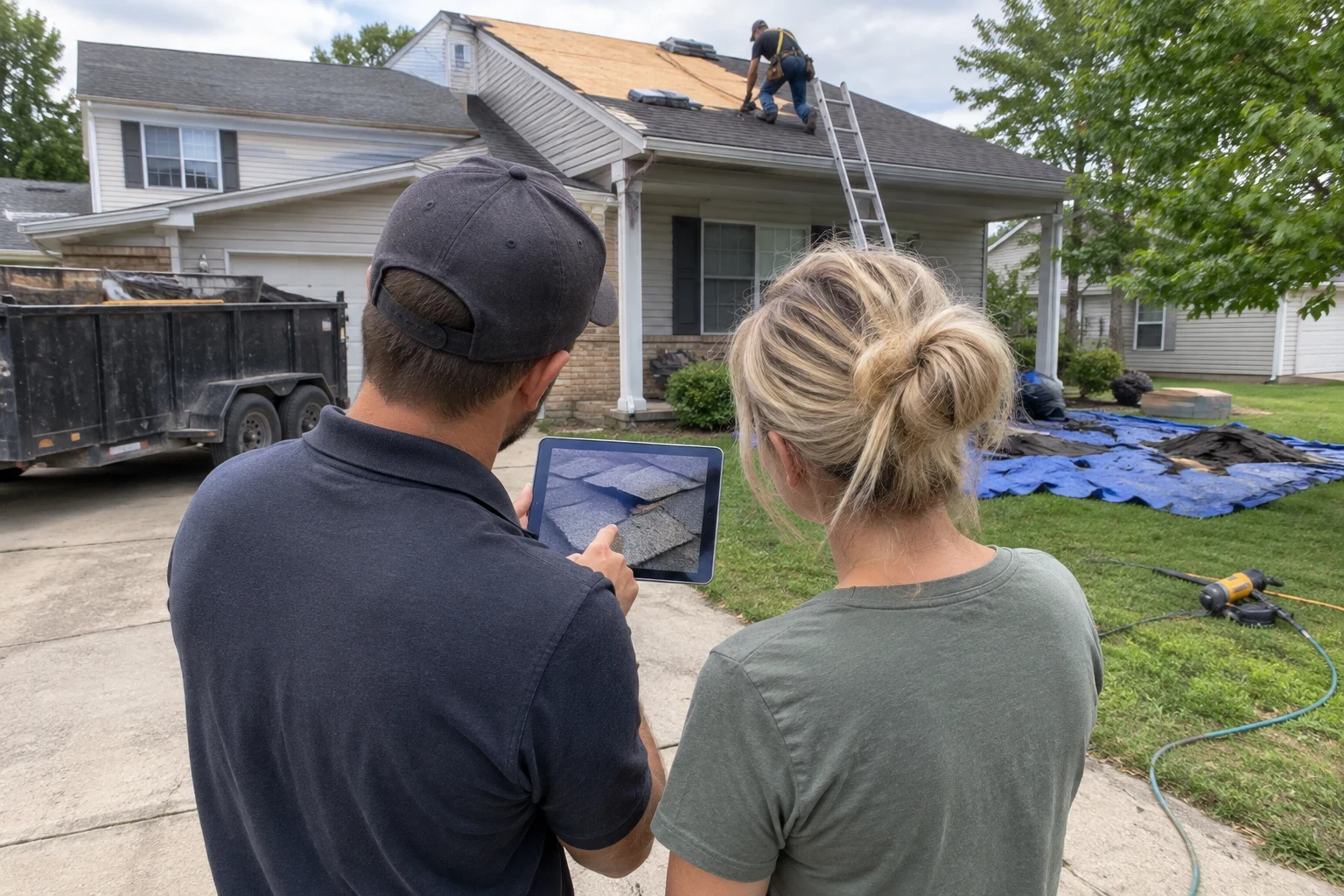
- We go over each section of the roof, along the ridges and down every valley, taking pictures of hail strikes, creased tabs and dented metal. The photos are yours to keep, so you see the same thing we did.
- Temporary protection
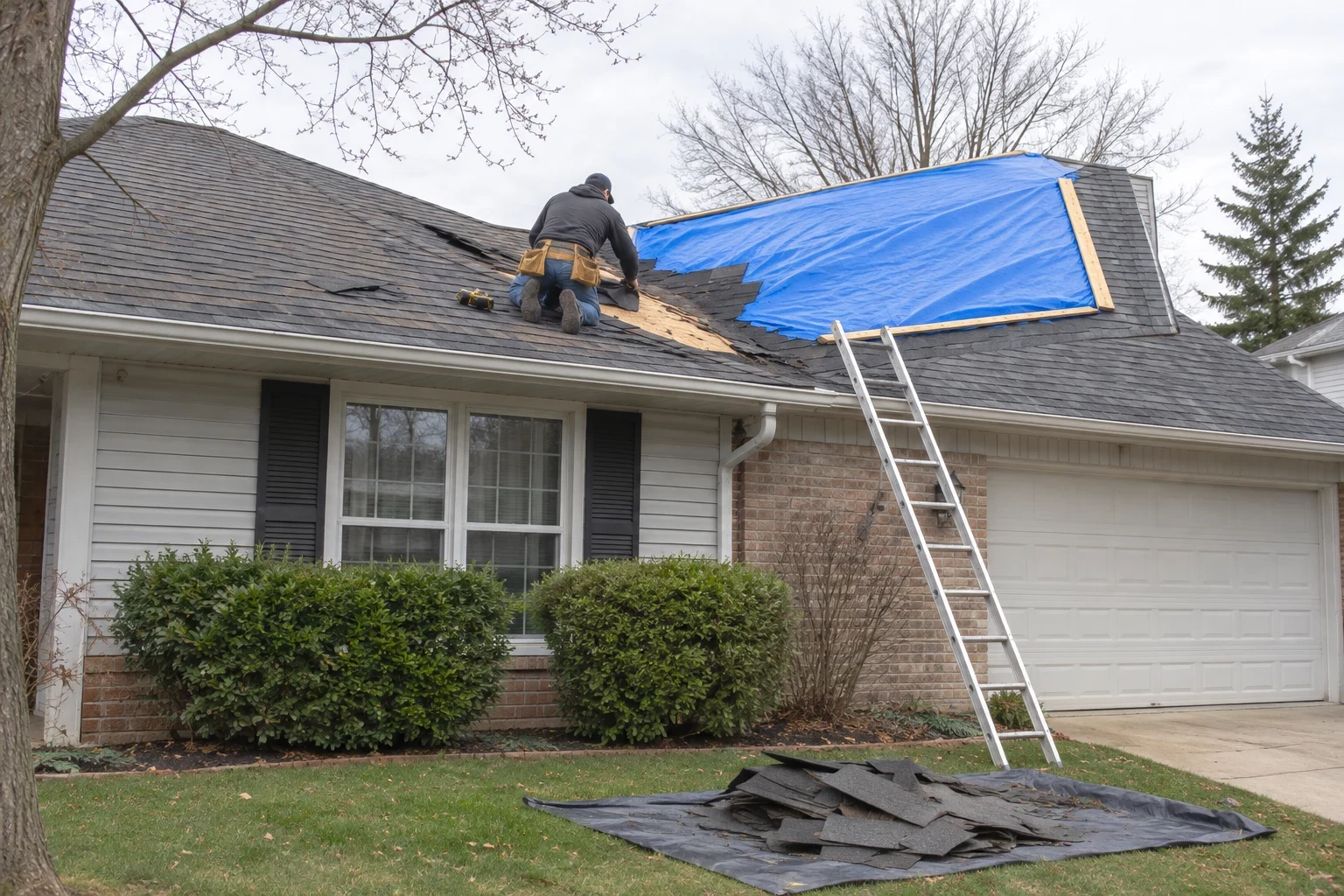
- If the storm left an opening, we tarp or seal it so water stays out of the decking and attic until the permanent fix is in.
- Shingle and flashing repair
- Damaged shingles are replaced with the closest match we can source, lifted flashing is reset or renewed, and vents and pipe boots are resealed. Shingles that wind pulled loose from their seal get replaced, not glued back down.
- Decking check
- Wherever shingles were torn away, we examine the plywood or OSB below. Wood that soaked through and softened gets replaced, never hidden under new material.
- Gutters and soft metals
- Dings in gutters, downspouts and drip edge help show how big the hail was. We record them for your file and repair what needs it; our Gutters page explains that work further.
- Help with your claim
- We work with homeowners and insurance companies on storm damage claims. We can join the adjuster on the roof and share our photos and measurements. Coverage is the adjuster's call; we help you make sense of what they wrote.
Signs your roof took storm damage
Dents in metal at ground level
Gutters, downspouts, vent caps and even the mailbox show hail first. Round dings down low usually mean the shingles above took the same hits.
Granules piled at the downspouts
A sudden heap of dark, sandy grit at the bottom of a downspout after a storm usually means hail knocked the protective granules loose.
Missing, creased or flipped shingles
Wind lifts shingle tabs and breaks the adhesive strip. A shingle that flapped once may lie flat again, but it no longer holds and tends to fail in the next blow.
A new ceiling stain
A water spot that appears after a storm points to an opening, often at flashing or a torn shingle. Catching it early keeps the repair small.
Branches on the roof
Limbs that land can puncture shingles or crack them from beneath. Leave the removal to us so the roof is not damaged further.
How a storm repair runs, from first call to cleanup
- 1
Free inspection
You call, we set a time, and we inspect the roof and gutters with photos. Please stay off the roof yourself; wet or hail-struck shingles are slick.
- 2
A plain explanation and written estimate
We sit down with you and go through the photos, separating storm damage from normal wear. You get a written, line-item estimate for repair, or for replacement if the damage truly calls for it.
- 3
The insurance step, if you file
If you choose to file, you contact your insurer and an adjuster schedules a visit. We can be there to point out what we found. Once the adjuster's report arrives, we go through it with you line by line.
- 4
Repair day
We cover plantings and the driveway with tarps, remove the damaged material and check the decking. Then we install new underlayment, shingles and flashing where needed, matched as closely as the market allows.
- 5
Cleanup and walkthrough
We run a magnetic sweep across the yard for nails, haul away debris, and take final photos. Then we walk you through what was done.
What moves the cost of a storm repair
Your price comes down to how much the storm truly broke and what turns up beneath the damaged material. We give no number before seeing the roof, since a few creased tabs and a fully bruised slope are very different jobs. When a claim is involved, what you pay is generally shaped by your deductible and policy terms, which we can walk you through but don't control. For work outside a claim, financing is available.
- The extent of the damage
- Swapping out a few shingles on a single slope is quick work. When hail has marked every slope, the conversation usually turns to replacement.
- Finding a shingle match
- Many older shingle lines are no longer made. If nothing close is available, a wider area may need new material so the roof reads as one surface.
- The decking beneath
- Plywood or OSB that has gone spongy or rotten must come out before new shingles are laid. Its condition only shows once the storm-damaged layer is lifted, so we photograph it and talk with you before adding that work.
- Pitch and access
- Steep slopes, second stories and tight corners around chimneys call for more time and more safety gear.
- Permits
- Bigger repairs and replacements can require a permit from the local building department. If yours does, we take care of pulling it.
Storm damage questions we hear most
Something not covered here? (317) 597-8283
Do I phone my insurer first, or get the roof looked at first?
It usually makes sense to have the roof checked before you file. Our inspection costs nothing and shows whether there is genuine storm damage. If we find little or none, you avoid opening a claim you don't need. If there is damage, you contact your insurer with photos already in hand.
How long do I have to report storm damage?
Your policy sets that, so confirm it with your insurer. Most expect damage to be reported promptly, and delay costs you in other ways too: a lifted shingle or split pipe boot keeps letting water through. Having the roof checked within a few weeks of a major storm is a sensible habit.
Can you match my existing shingles?
In many cases, yes, or very nearly. We bring samples and compare color and profile in daylight against your roof. If your line has been discontinued, we lay out the choices, from the closest available match to redoing a full slope, so you can weigh the trade-offs yourself.
What if the adjuster misses some damage?
We hand over our photos and measurements, and you can ask your insurer to review them or send someone back out. We explain what the report includes and what it doesn't. The coverage decision rests with the adjuster, and we are honest about that.
Is it safe to wait until next season to repair it?
Small openings seldom stay small. Water works under the shingles, soaks the decking and reaches the attic insulation, turning a modest fix into a bigger one. Hail bruises can also split open through a winter of freezing and thawing.
Do you offer financing for storm repairs?
Yes, financing is available. It can cover your deductible, work your policy leaves out, or a repair you decide to handle without a claim. We can talk it through during your inspection.
Get a clear picture of your roof after the storm
We go over every slope, take photos of anything the weather damaged, and lay out your choices in plain English. Our crews work across Plainfield and in neighboring towns including Avon, Brownsburg and Mooresville.