ServicesRoof Inspections
Roof Inspections in Plainfield
Our inspection covers the whole roof system: shingles, flashing, vents, gutters and the attic decking underneath. You then see photos of every finding with a plain explanation, sorted into what needs attention now, what can wait and what is in good shape.
What a roof inspection tells you
Most roof problems start small and out of sight. A lifted shingle tab, a cracked rubber boot around a vent pipe, or flashing that has pulled away from a chimney can let water in for months before a stain shows on a ceiling. An inspection finds those details while they are still simple to fix.
Central Indiana roofs take a steady beating from freeze and thaw cycles, spring hail and summer wind. None of that means your roof is failing. It means a periodic look is worth having, and so is an honest read of what we see. You get a short written summary in plain language, the photos to go with it, and our view on whether anything should be done. If the answer is that your roof is in good shape, we will tell you exactly that.
What goes into the inspection
Shingles and their granule coating
Missing, creased or curling shingles get noted, along with bare spots where the gritty granule layer has worn away. When that grit piles up in the gutters, an asphalt roof is usually getting close to the end of its service life.
Flashing, vents and pipe boots
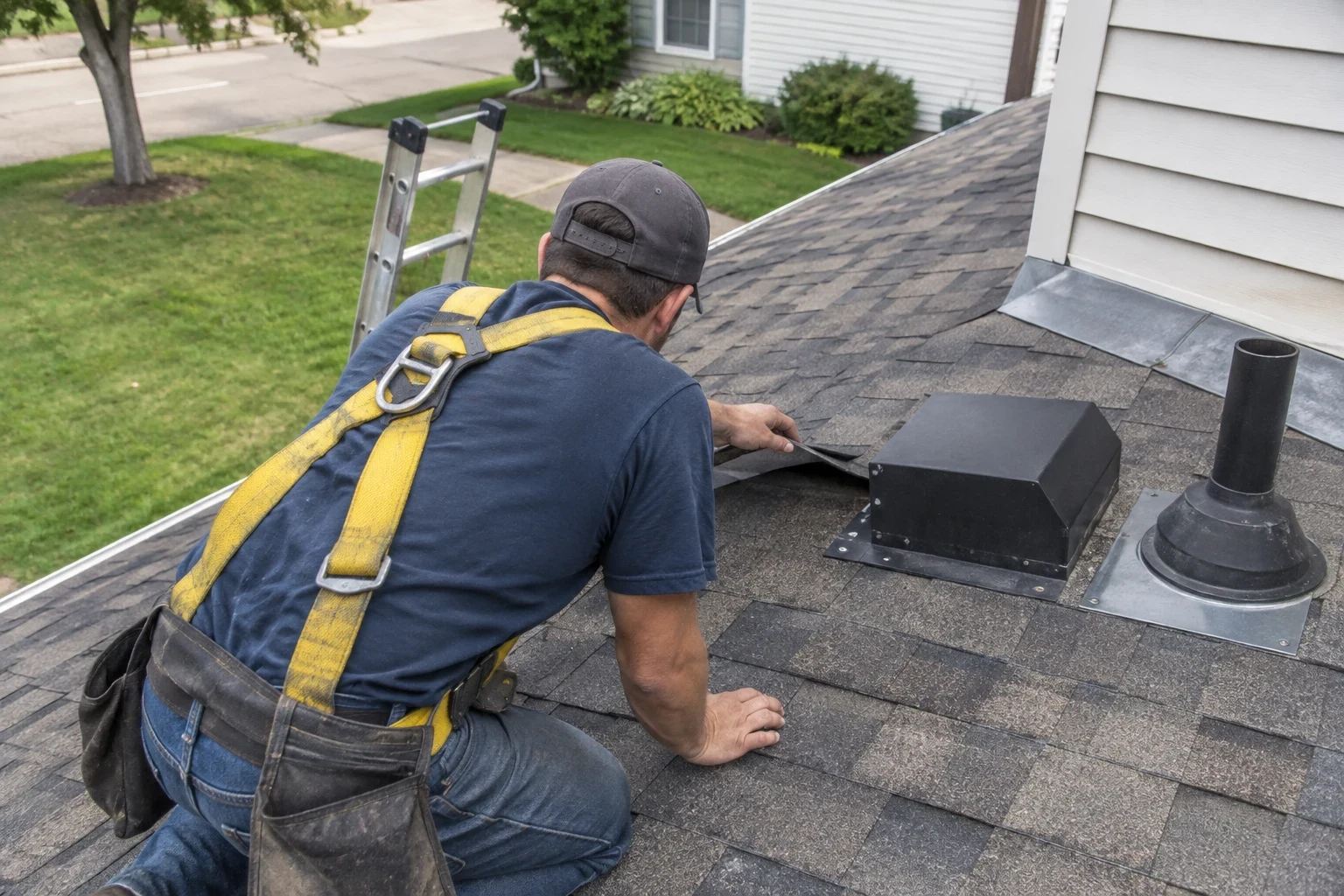
Most leaks begin where the roof is pierced or meets a wall, such as at chimneys, skylights and vent pipes. We make sure the metal flashing sits tight with its seal intact, and we look for rubber boots around pipes that have cracked after many seasons of sun and frost.
Attic, decking and ventilation
Inside, we watch for pinholes of daylight, water marks, damp insulation and plywood that looks dark or feels soft. Airflow matters too. An attic that holds heat and moisture wears shingles out faster and helps ice dams form in winter.
Gutters and downspouts
Sagging sections, loose hangers, blocked downspouts and water running behind the gutter all go in the notes. Drainage that fails can rot the fascia and send water back under the roof edge.
Storm marks from hail and wind
Bruised or wind-lifted shingles rarely show from the lawn. Any marks we find are photographed up close, which gives you something solid to weigh before deciding on a storm damage claim.
When an inspection makes sense
- After hail or high wind
- A roof can look fine from the driveway and still have loosened or bruised shingles. Having it checked within a few weeks of the storm makes any damage easier to document.
- Water marks indoors
- A brown ring on the ceiling, paint bubbling near the top of a wall or a musty smell in the attic usually means water is finding a way in above.
- Grit in the gutters
- A brand-new roof sheds some granules. On an older roof, steady piles of that grit mean the shingles are thinning.
- Heavy ice along the eaves
- Thick ice ridges at the roof edge often point to warm air leaking into the attic. Meltwater trapped behind that ice can work under shingles and into walls.
- A home sale on the calendar
- Buyers and sellers both plan better when they know the roof's condition and remaining life, and it keeps a late surprise from upsetting the closing.
- Fifteen years on the same shingles
- Asphalt wears slowly. A check around this age lets you budget ahead rather than react to a leak.
What happens on inspection day
- 1
It starts with your call
Tell us what has you thinking about the roof, whether that is a stain, a recent storm or just its age. Then we agree on a time that works for you.
- 2
Up on the roof
If the surface is safe to walk, we check the shingles, flashing, vents and ridge in person. Steep or brittle roofs get inspected from a ladder at the eaves, with close-up photos filling in the rest.
- 3
A look in the attic
With your okay, we spend a few minutes in the attic checking decking, insulation and airflow. A protective cloth goes down beneath the access hatch first, and we tidy up before climbing out.
- 4
Going over the results together
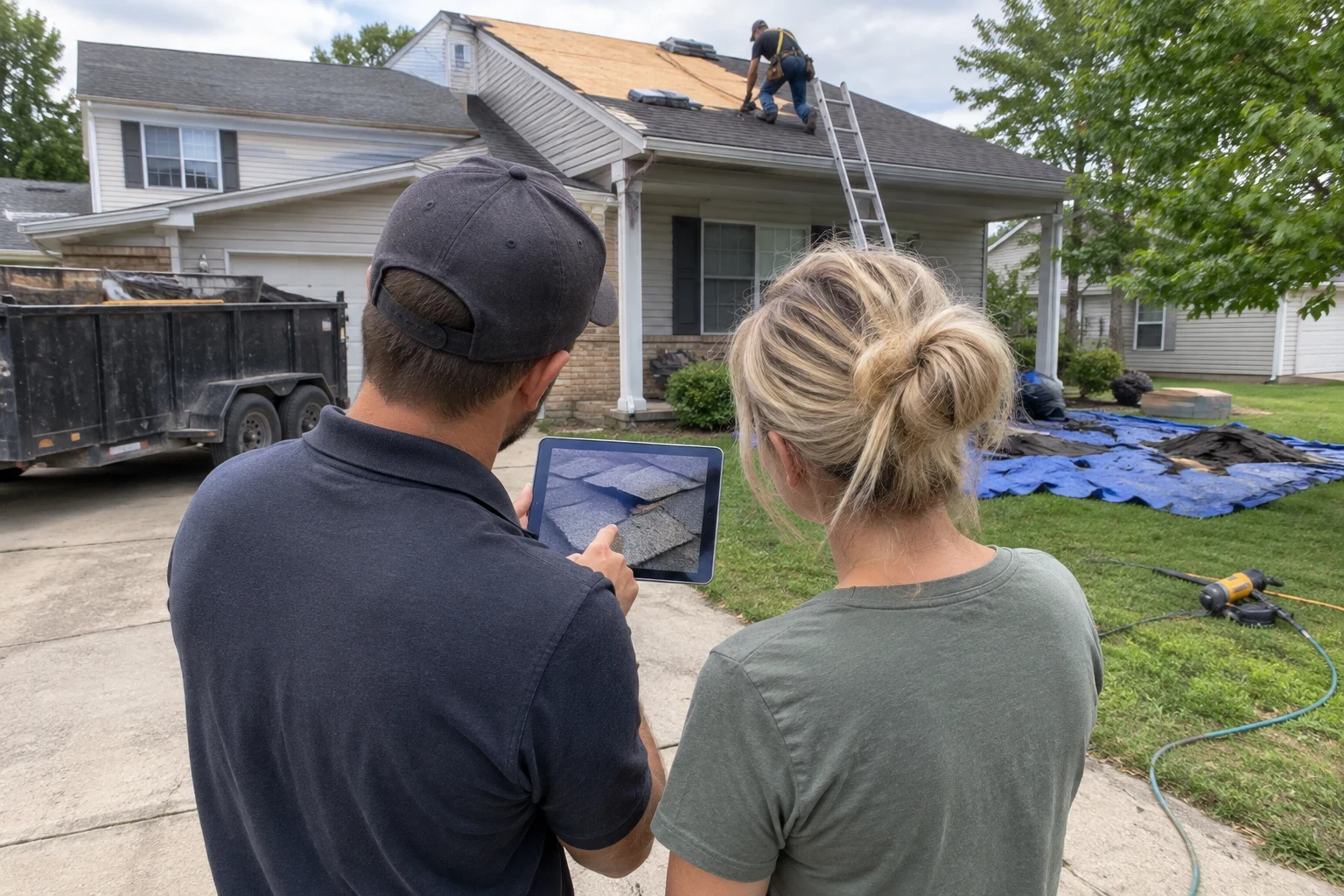
We show you each photo and explain it in everyday language, grouping findings into work needed now, items to watch and things that are fine. When repair or replacement is worth discussing, we lay out the options and the decision stays yours.
What the inspection costs, and what drives the price of any work
You pay nothing for the inspection, and you are under no obligation afterward. If we do find work worth doing, the price comes from the details of your roof, not a preset package. Each line on the estimate is explained so you can see where the money goes, and financing is available for larger jobs.
- How big and how steep
- A larger roof calls for more shingles, more underlayment and more hours on site. A steep slope slows every step of the work and requires extra safety gear for the crew.
- What the decking looks like
- Plywood that has gone soft or rotten must come out and be swapped for sound boards before new roofing is installed. The full extent only shows once the old layers are stripped, and if we find bad boards, you see photos of them.
- Which material you choose
- Architectural shingles, metal panels and TPO membrane differ in both material cost and installation labor.
- Old layers and access
- Removing two layers instead of one adds labor and disposal. Tight lots, garden beds and detached garages can also stretch the schedule.
Roof inspection questions
- How long does an inspection take?
- For a typical home, usually less than an hour. A bigger roof, several roof sections or a closer attic check can add some time. Either way, we review what we found with you before we go.
- Do I need to be home?
- It is best if you are, mainly for the attic and the review at the end. If that does not work, we can check the exterior and talk through the photos with you over the phone later.
- Will you use the inspection to push a replacement?
- No. A good share of the roofs we look at need only a small fix, and some need nothing at all. We tell you what we saw and why it matters, and when replacement is worth thinking about, we give you a straight estimate of how much life the current roof still has.
- Can an inspection help with an insurance claim?
- Yes. Adjusters want clear, dated photos of hail or wind damage, and that is what we take. We work with homeowners and insurance companies on storm damage claims and can explain how a claim usually unfolds, though the adjuster makes the coverage decision.
- How often should a roof be inspected?
- For most homes, every year or two is reasonable, plus a check after any serious hail or wind. Roofs past their middle years are worth a yearly look. That holds for homes in Plainfield as much as in Avon or Brownsburg.
Find out where your roof really stands
One call gets you a careful look, clear photos and an honest explanation of what they mean. We serve Plainfield and the surrounding area.