ServicesShingle Roofing
Shingle Roofing in Plainfield
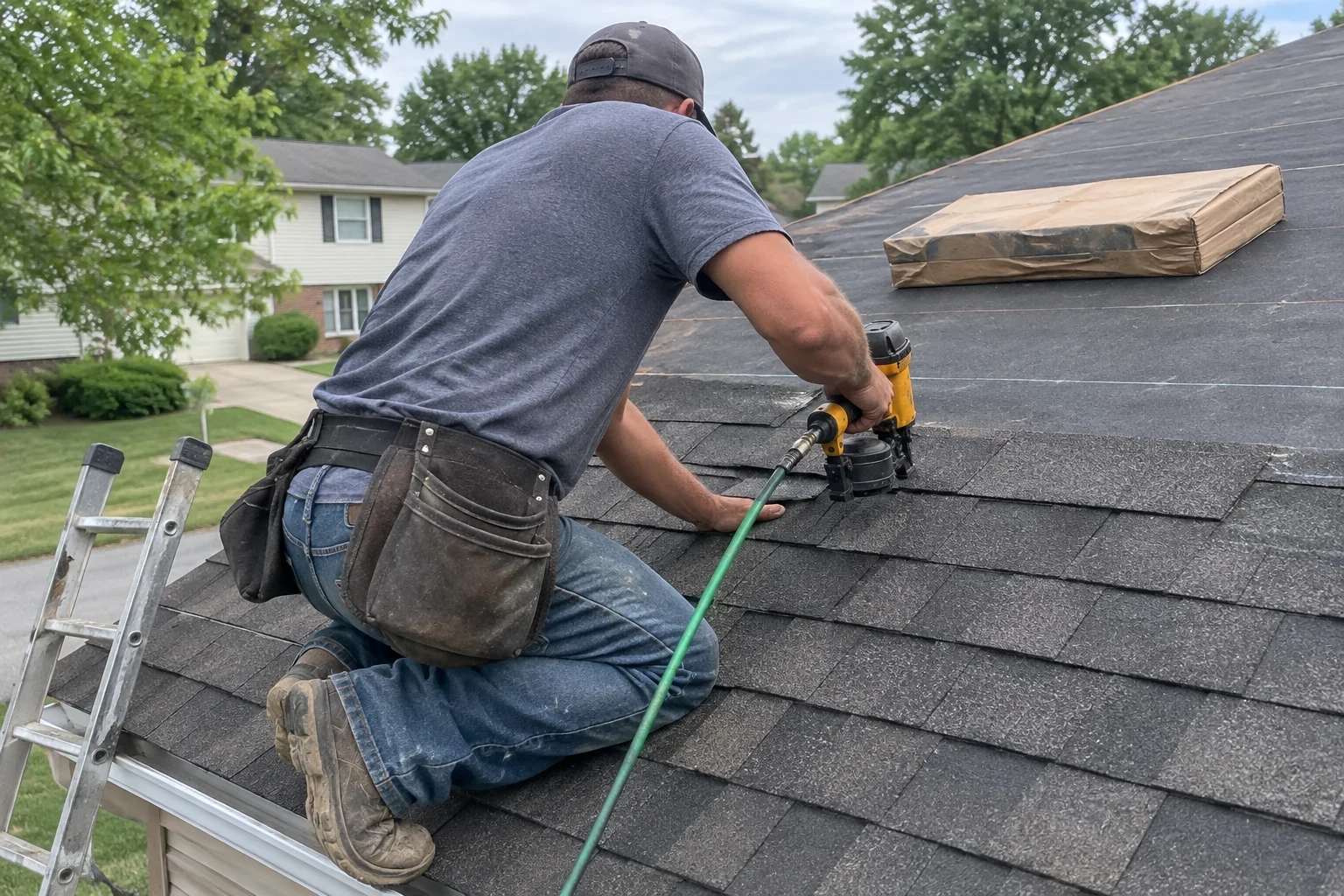
We install asphalt shingle roofs as a complete system: deck, underlayment, flashing, ventilation and shingles working together. Before any work is scheduled, we walk you through each shingle grade and what it means for how long your roof lasts and how it looks.
What a Shingle Roof Really Is
Most people picture the shingles, but they are only the top layer. Underneath sit the wood deck, a waterproof membrane at the eaves and valleys, synthetic underlayment across the field, metal drip edge and flashing at every wall and chimney. A good shingle roof depends on all of those pieces being right.
Shingles are the sensible choice for most pitched roofs. They cost less than metal, come in many colors and profiles, and any part of the roof can be repaired later without special tools. Central Indiana winters bring repeated freezing and thawing, so we pay close attention to the ice barrier at the edges, where meltwater tends to back up.
If your roof is low-slope or nearly flat, shingles are the wrong material, and we will tell you so. TPO roofing is built for that job, and metal roofing is worth a look if you plan to stay in your home for decades.
What Your New Shingle Roof Includes
- Tear-off to the bare deck
- The old layers come off rather than being buried under new ones. With the wood exposed, we can find soft or rotted decking and replace it before anything new is laid.
- Ice and water barrier
- A self-adhering membrane runs along the eaves and down each valley. It closes tight around nail shanks and holds back water that ice dams push up beneath the shingles.
- Synthetic underlayment
- The remaining deck is covered with synthetic underlayment, which resists tearing underfoot and stays put in wind far better than the felt paper found on older roofs.
- New flashing and pipe boots
- Walls get new step flashing, chimneys get counterflashing and every vent pipe gets a fresh rubber boot. Leaks most often begin at these small parts, so we install new ones instead of reusing the old.
- Balanced ventilation
- We compare the air coming in at the soffits with the air leaving at the ridge. When the two are in balance, the attic runs cooler in summer and drier in winter, and the shingles age more slowly.
- Starter strip, ridge cap and cleanup
- Starter shingles lock down the roof edges against wind, and color-matched ridge caps finish each peak. Before we leave, the crew rolls a magnetic sweeper across your yard, garden beds and driveway so stray nails and scraps go with us.
Signs Your Shingles Are Ready to Replace
Granules in the gutters
As shingles age, they lose the gritty top coating that shields them. Drifts of granules in the gutters or at the base of downspouts tell you the asphalt is now taking direct sunlight.
Edges lifting off the roof
Shingles whose corners turn up or whose edges bow away from the roof have lost their flat seal. Once that happens, a strong gust can get underneath them.
Missing or creased tabs
Losing a handful of shingles in a storm is a job for roof repair. When creases show up across several slopes, the adhesive strips have failed, and replacing the roof usually makes more sense.
Brown spots indoors or in the attic
A stain on a ceiling or on the underside of the roof boards often traces back to worn flashing or underlayment rather than the shingles. We find the actual entry point before recommending any fix.
A sagging roofline
Low spots between rafters generally mean the decking has been soaking up water for some time. That should be looked at soon.
What Shapes the Price of a Shingle Roof
Every part of the job gets its own line in your written estimate, which makes it easy to see what you are paying for and why. Two homes of the same square footage can come out quite differently once pitch, old layers and decking are counted. Financing is available if you would rather spread the cost over time.
Roof size and pitch
Steeper slopes take more time and safety gear, and every extra valley or dormer adds cutting and flashing.
Shingle grade
Architectural shingles cost more than 3-tab but last longer and handle wind better. Impact-rated shingles cost more again and may lower some insurance premiums.
Layers to remove
A roof with two old layers takes longer to tear off and fills more dumpster space.
Condition of the deck
Rotted or delaminated plywood is replaced by the sheet. Nobody can know the exact amount until the old roof is off, so the per-sheet cost is written into the estimate before work begins.
How a Shingle Roof Goes On
- 1
Inspection and options
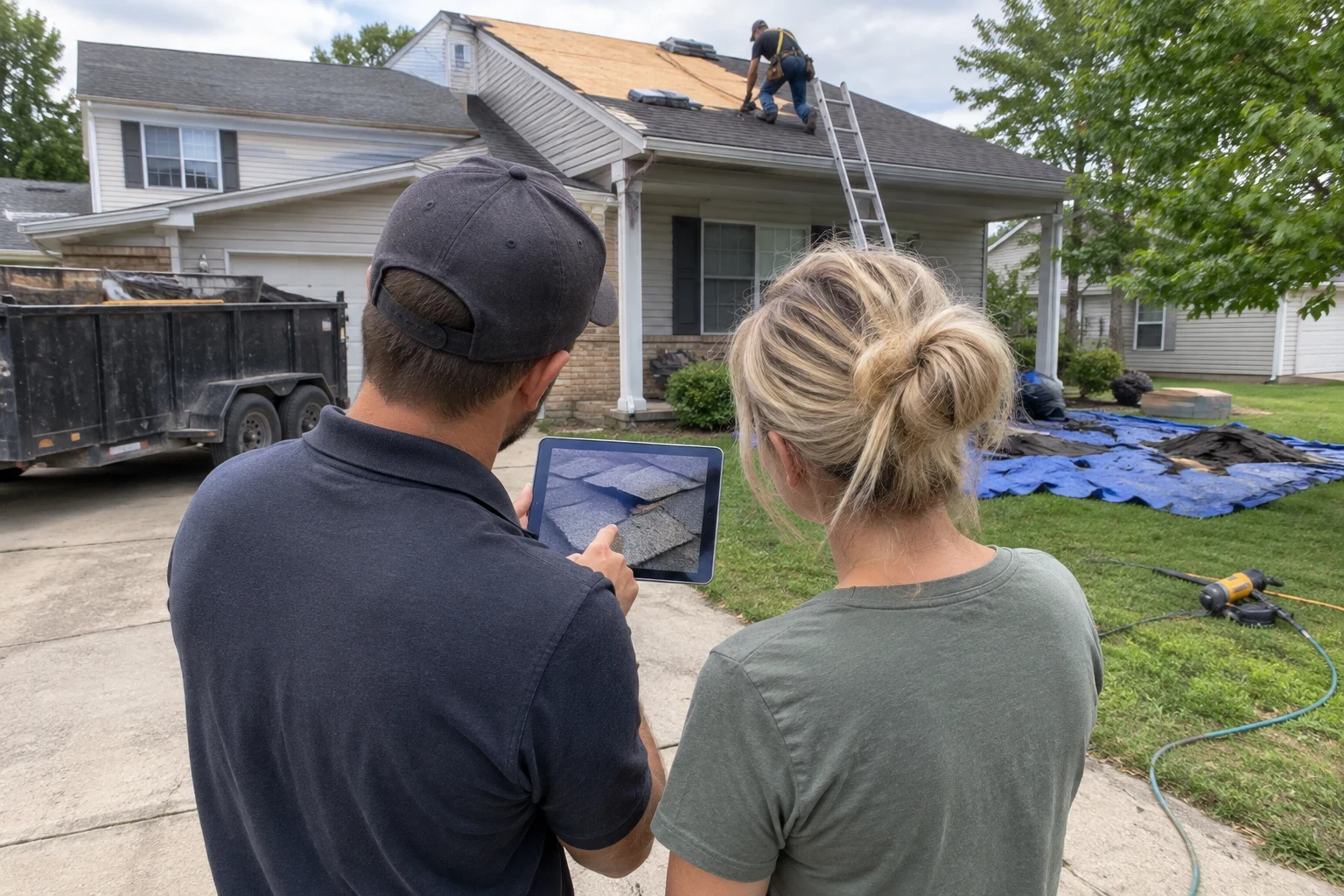
We look at the roof, the attic and the gutters, take photos, and explain what we found. You get a written estimate that lists 3-tab, architectural and impact-rated shingles side by side so the differences are clear.
- 2
Permit and materials
We pull the permit where your town requires one and order shingles in the color you chose. Delivery usually arrives a day ahead.
- 3
Protecting your property
Tarps go over plants and against siding, plywood leans over windows near the work, and the dumpster sits where it will not mark the driveway.
- 4
Tear-off and install
Most homes are stripped, re-decked where needed and shingled in one or two days. We show you any replaced decking before it is covered.
- 5
Walkthrough
Once the crew finishes and cleans up, we walk the job with you and point out the flashing, vents and ridge so you know what was done.
Shingle Roofing Questions
What is the real difference between 3-tab and architectural shingles?
A 3-tab shingle is one flat layer cut into evenly spaced tabs. An architectural shingle bonds two layers together, so it is thicker, heavier and better at staying down in wind, and it gives the roof a dimensional look. For most homes we recommend architectural, because the added years usually justify the modest step up in cost.
Are impact-resistant shingles worth it?
They deserve a look if hail has hit your roof before. These shingles are made to resist cracking when hailstones strike, and some insurers discount premiums for them. We will lay out the cost difference, and we suggest checking with your agent about what it would mean for your policy.
Is it okay to lay new shingles on top of the existing roof?
Code does allow a second layer in certain cases, but we advise against it. Roofing over the old shingles hides the decking from view, traps more heat under the new layer and makes a future leak harder to trace. Taking the roof down to the wood lets us fix whatever we find before the new shingles go on.
How do I pick a color?
Darker shingles hide streaking well but absorb more heat. Lighter grays and browns stay cooler. We bring full-size samples so you can see them against your brick or trim in daylight.
My shingles were damaged in a storm. Will insurance pay?
It depends on your policy and the damage. We work with homeowners and insurance companies on storm damage claims, documenting what we find with photos so your adjuster has clear information. Our storm damage repair page explains more.
See What Your Roof Needs
We will look over your shingles, flashing and attic, then talk through your options in plain terms. Nothing is scheduled until you are comfortable with the plan.