ServicesMetal Roofing
Metal Roofing in Plainfield
Metal can protect your home for decades, provided the panel, the finish and the installation are matched to your roof. We explain each option in everyday language, show you what we would choose and why, and fit it with the patience the material asks for.
What a Metal Roof Is, and When It Makes Sense
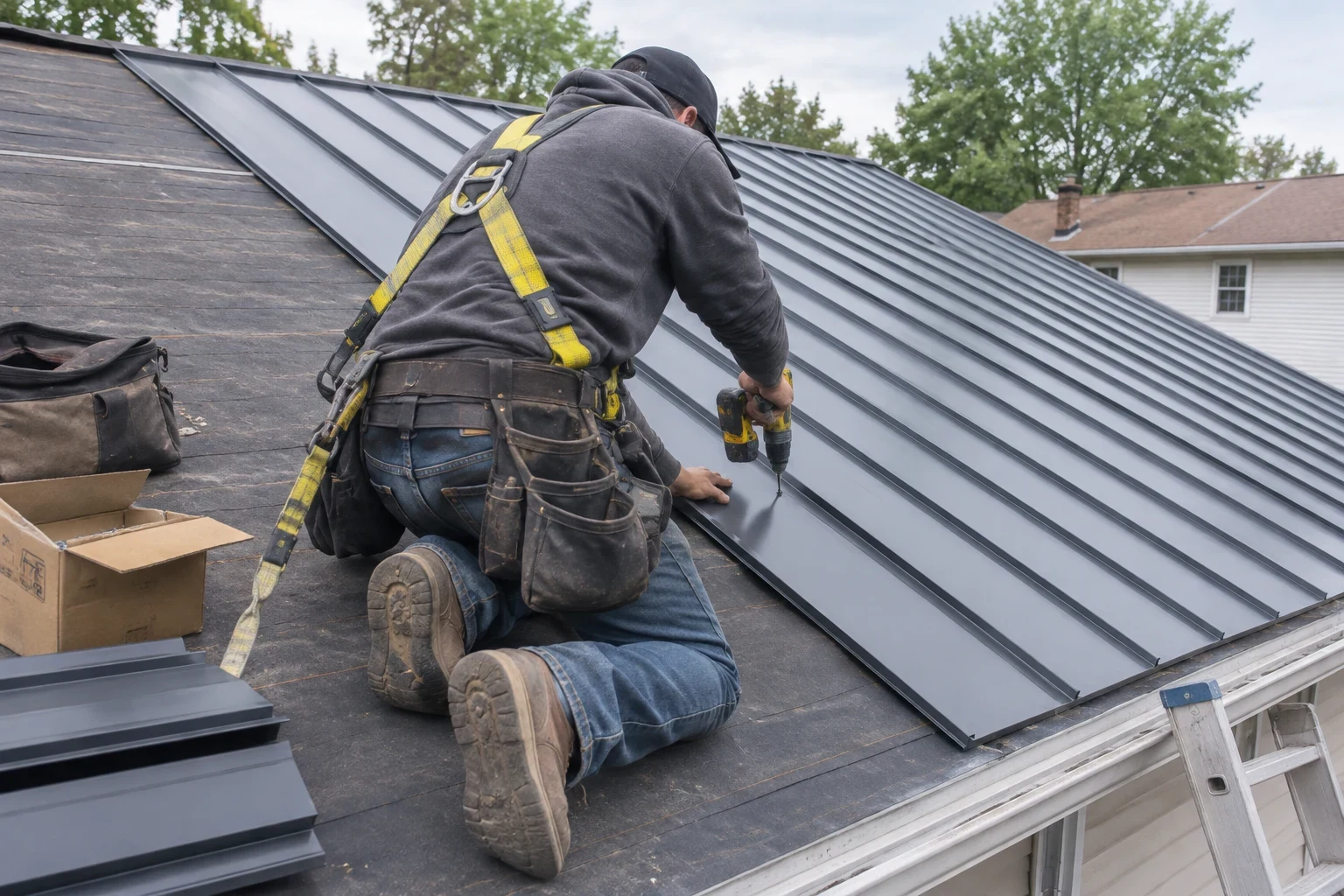
Most residential metal roofs fall into two families. Standing seam panels run from ridge to eave with raised seams that lock together, and the fasteners stay hidden under the seam. Exposed-fastener panels, sometimes called screw-down or ag panels, are fixed with screws through the face of the metal. The first costs more and asks less of you over time. The second costs less up front but needs its screws and washers checked as the years go by.
Metal is a strong choice when you plan to stay in your home a long time, want a roof that sheds snow well, or are tired of replacing shingles after hail and wind. It is a weaker choice if you expect to sell soon or if the roof has many small valleys and dormers that turn a simple panel layout into a lot of custom cutting. We'll tell you honestly which side of that line your roof sits on.
What Our Metal Roofing Work Includes
- Panel and metal selection
- We explain the difference between steel with a Galvalume coating and aluminum, and between panel profiles, so you can see why one fits your roof better than another.
- Finish choices you can compare
- Paint systems vary. We show you the difference between standard polyester finishes and higher-grade PVDF coatings, which hold their color longer under summer sun.
- Tear-off and deck check
- We usually remove the old roofing so we can see the wood deck underneath. Soft or rotted sheathing gets replaced before any metal goes on, and we photograph what we find.
- Underlayment made for heat
- Panels get very hot on a summer afternoon, so the layer beneath them has to cope. We lay a synthetic underlayment built for high temperatures, which keeps the deck dry if water ever finds its way under the metal.
- Trim, flashing and snow guards
- Ridge caps, eave and rake trim, and flashing around chimneys and vents are formed to match the panels. Where snow sliding off would land on a walkway or a lower roof, we recommend snow guards.
- Cleanup with magnets
- Metal jobs leave screws and sharp offcuts. We sweep the yard and driveway with rolling magnets before we leave.
Signs a Metal Roof Is Worth Considering
You're on your second or third shingle roof
If you have replaced asphalt more than once in the same house, a metal roof may cost less over the time you plan to live there.
Hail or wind keeps sending you to your insurer
Repeated storm claims are a hassle. Heavier-gauge metal resists wind uplift well and handles moderate hail better than most shingles, though large hail can still dent it.
Ice dams form along your eaves
Snow slides off smooth metal more readily than off shingles, which helps keep heavy ice from building at the edge of the roof.
Your existing metal roof shows wear
On older screw-down roofs, look for rust around fasteners, cracked rubber washers, or screws backing out. Those are often repairable, and we'll say so if a full replacement isn't needed.
You want a roof that reflects heat
Lighter metal finishes reflect more sunlight than dark shingles, which can keep an attic cooler through Indiana summers.
What Moves the Cost of a Metal Roof
Metal costs more than asphalt to buy and to install, because the panels are heavier, the trim is formed by hand and the work is slower. The price for your home depends mostly on a few things we can measure and explain. Your estimate shows each one separately, and we offer financing if you'd like to spread the cost.
Panel system
Concealed-fastener standing seam takes more material and labor than exposed-fastener panels. The gap between them is the biggest single choice you'll make.
Metal, gauge and finish
Aluminum costs more than coated steel. Thicker gauges and PVDF paint add cost but resist denting and fading longer.
Roof shape
A simple gable roof goes quickly. Valleys, dormers, skylights and chimneys each need custom flashing and add cutting time.
Condition of the deck
We won't know how much sheathing needs replacing until the old roof is off. We explain how we price that ahead of time so it isn't a surprise.
How a Metal Roofing Job Runs
- 1
Free inspection and measurements
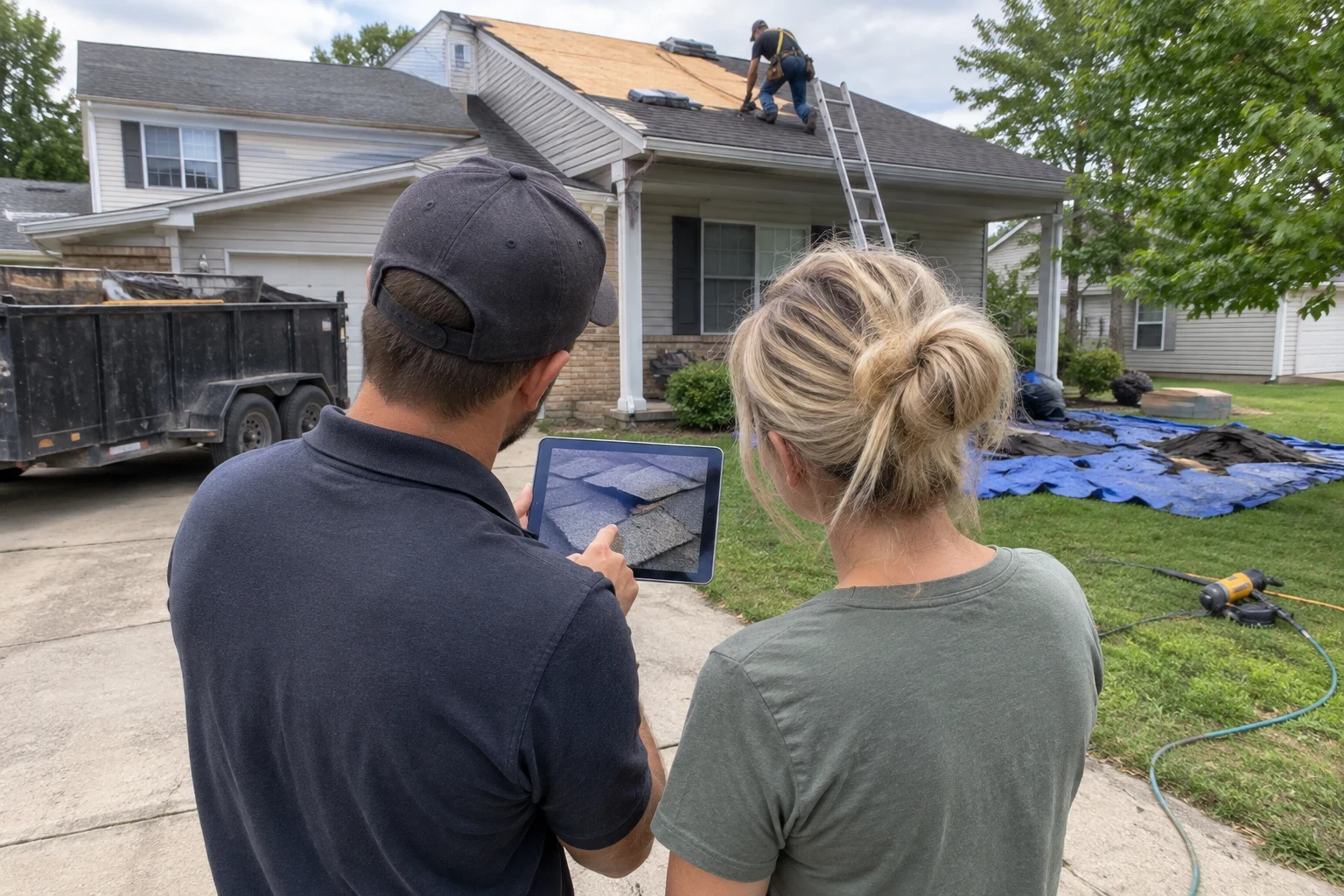
We look at the deck, attic ventilation, slope and every penetration. You get photos and a plain explanation of what we saw.
- 2
Written estimate with options
We lay out panel type, gauge, finish and trim line by line, so you can compare standing seam and exposed-fastener side by side. We handle the permit where one is required.
- 3
Panel ordering
Standing seam panels are often cut to length for your roof. We measure carefully so each run reaches from ridge to eave in one piece.
- 4
Installation
We tear off, repair the deck, lay underlayment, then install panels with clips or fasteners that allow the metal to expand and contract with temperature swings. Flashing and trim go on last.
- 5
Walkthrough and cleanup
We sweep for metal debris, walk the roof with you from the ground, and point out anything you should know about care, such as not walking on the panels.
Metal Roofing Questions
Is a metal roof loud when it rains?
Not on a typical home. Panels laid over a solid wood deck and underlayment, with insulation in the attic below, sound much like any other roof. The loud tin roofs people remember are usually on open barns with no deck.
Does a metal roof make a lightning strike more likely?
It doesn't. Lightning tends to find the tallest point nearby, not a particular material, so a metal roof is no more of a target than shingles are. If a strike does happen, the metal won't burn, and it spreads the charge across a wide surface. That is why it isn't treated as an added risk.
Can you put metal over my existing shingles?
Sometimes it is allowed, but we usually recommend tearing off. Removing the shingles lets us inspect and repair the deck, and it avoids trapping moisture between layers. We'll explain the tradeoff for your roof.
What is oil canning?
It is a slight waviness you may see in the flat part of a standing seam panel. It is cosmetic and does not affect how the roof sheds water. Careful handling, proper fastening and striated or ribbed panels help reduce it.
Does metal dent in hail?
Large hail can dent metal, especially thinner gauges and aluminum. Dents are usually cosmetic and the roof keeps working. If a storm does damage your roof, we work with homeowners and insurance companies on the claim.
See Whether Metal Fits Your Roof
We'll inspect your roof, explain the options in plain terms and leave the decision with you. We work in Plainfield and nearby towns including Avon, Brownsburg and Danville.