ServicesGutters
Gutter Installation and Repair in Plainfield
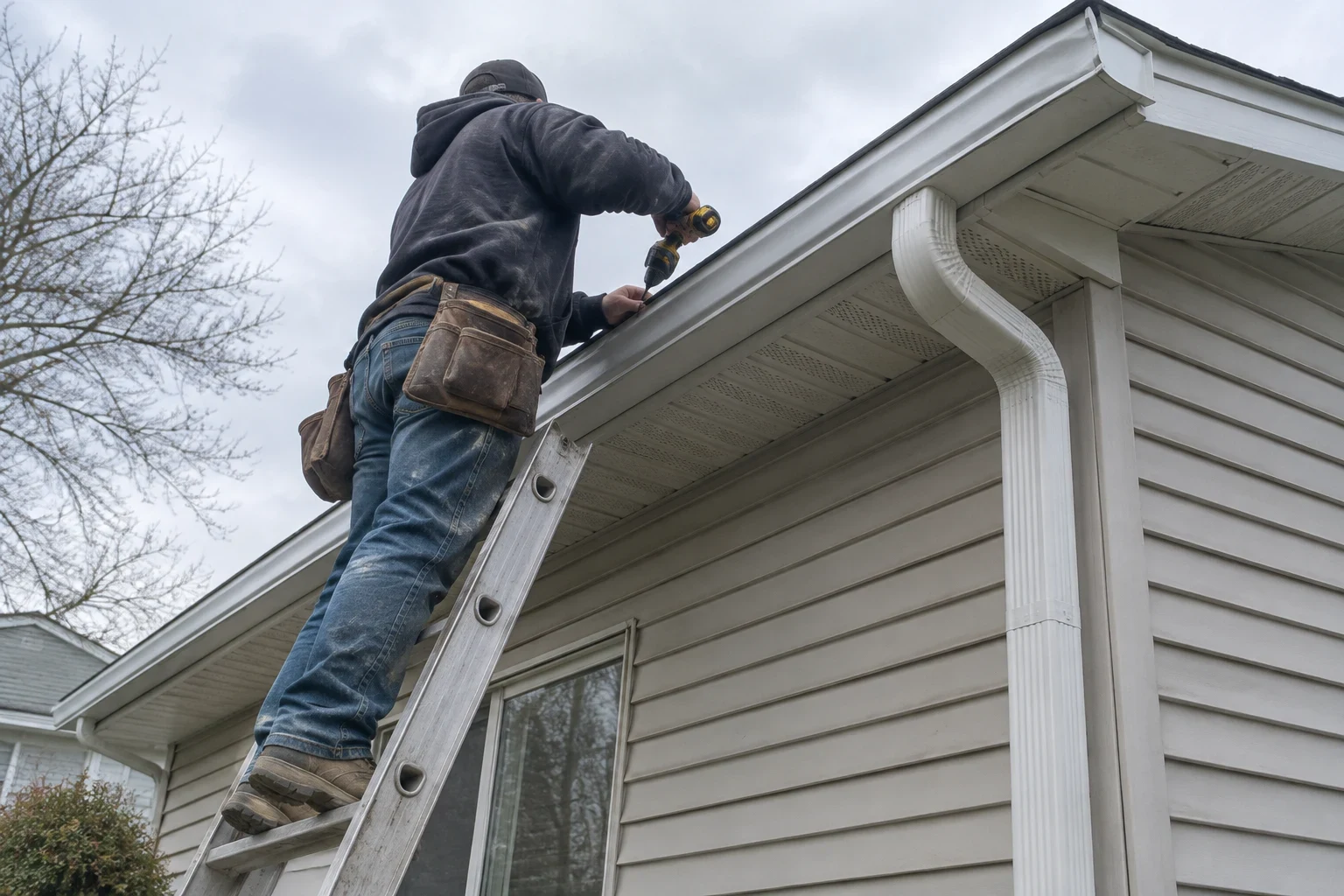
A gutter's work is simple: move roof water away from your home before it soaks the fascia, stains the walls or pools at the foundation. We install and repair one-piece aluminum gutters and downspouts, and we explain sizing, guards and drainage so each choice makes sense to you.
What a Gutter System Actually Does
A roof sheds a surprising amount of water. During a steady spring storm, a single valley can send a stream into one corner of a gutter, and if that gutter is undersized, sagging or clogged, the water spills over the front edge. It lands at the base of the wall, soaks the soil beside the foundation and, over time, finds its way into a basement or crawl space.
Most problems we see come from three things: gutters pitched the wrong way, hangers that have pulled loose from rotting fascia, and downspouts that empty right next to the house. Each one has a different fix, and some do not require new gutters at all. When a section can be repaired, we will tell you so.
Gutters also work with the roof, not apart from it. The drip edge and the first course of shingles should direct water into the trough, which is why we look at the roof edge during every gutter visit. If you are planning a roof replacement, it is usually the right time to replace gutters as well, since they come off anyway.
What Our Gutter Work Includes
- One-piece aluminum runs
- We roll each gutter on site from a continuous coil of aluminum, so a run stretches from corner to corner without a joint in the middle. That leaves fewer spots for water to escape and a finish that looks even along the whole eave.
- Sizing matched to your roof
- The standard 5-inch K-style profile handles many homes well. Steep pitches, broad roof planes and valleys that funnel water into one corner often call for 6-inch gutters and larger downspouts. We measure, then show you which size fits and why.
- Hidden hangers and steady slope
- Hidden hangers are screwed into the fascia at close intervals, which holds under snow and ice far better than older spikes. Every run gets a gentle fall toward its downspout so water drains rather than freezing in place.
- Downspouts and extensions
- Downspouts go where water has somewhere to go, with extensions or splash blocks that carry it several feet from the foundation.
- A look at fascia and drip edge
- The gutter is only as secure as the board behind it. We test the fascia first and photograph any soft or rotted wood, so you can decide on that repair before anything is attached.
- Gutter guards, when they earn their place
- Guards often pay off under mature trees and matter less on an open lot. We describe the main types and how much cleaning each really saves, then leave the choice to you.
When Your Gutters Are Asking for Help
Overflow in an ordinary rain
If water sheets over the outer lip during a normal shower, the cause is usually a clog, a trough too small for the roof above it, or a run sloped backward. Next time it rains, note which corner spills.
Sagging or pulled-away sections
A gutter that dips in the middle or tilts away from the house has lost hangers, or the fascia behind them has gone soft. Water then runs down behind the trough instead of into it.
Stains or peeling paint under the eaves
Dark streaks, mildew or blistered paint below the roof edge mark the seams and corners where water is getting out.
Heavy ice along the eaves
Thick ridges of ice after a freeze often mean the gutter is holding standing water. That ice can creep under shingles and show up later as a ceiling stain.
Eroded beds or a damp basement
Little channels cut through mulch, or a basement wall that turns damp after rain, usually lead back to a downspout that empties too close to the house.
What Shapes the Cost of New Gutters
The price of a gutter job follows the length of your eaves and the particulars of your home, so we measure before we quote anything. Your written estimate separates materials from labor, which makes it easy to see where each dollar goes. Financing is available if you prefer to pay over time.
Linear footage and corner count
Every extra foot of eave needs more aluminum. Each inside or outside miter adds a joint that has to be cut, fitted and sealed by hand.
Gutter width and downspout size
A 6-inch trough with oversized downspouts uses more metal than the standard 5-inch profile. On some roofs that extra capacity is what keeps water in the gutter.
How high and how reachable
A second-story eave, a steep pitch or a narrow gap between houses means more ladder work and setup time than a single-story ranch.
The boards behind the gutter
New hangers need solid wood to bite into. If the fascia is soft, it gets replaced first, and that line appears on its own in your estimate.
Optional add-ons
Guards, connections to underground drains and longer extensions each raise the total. None are required, and each is priced separately.
How a Gutter Job Runs
- 1
Inspection and measurements
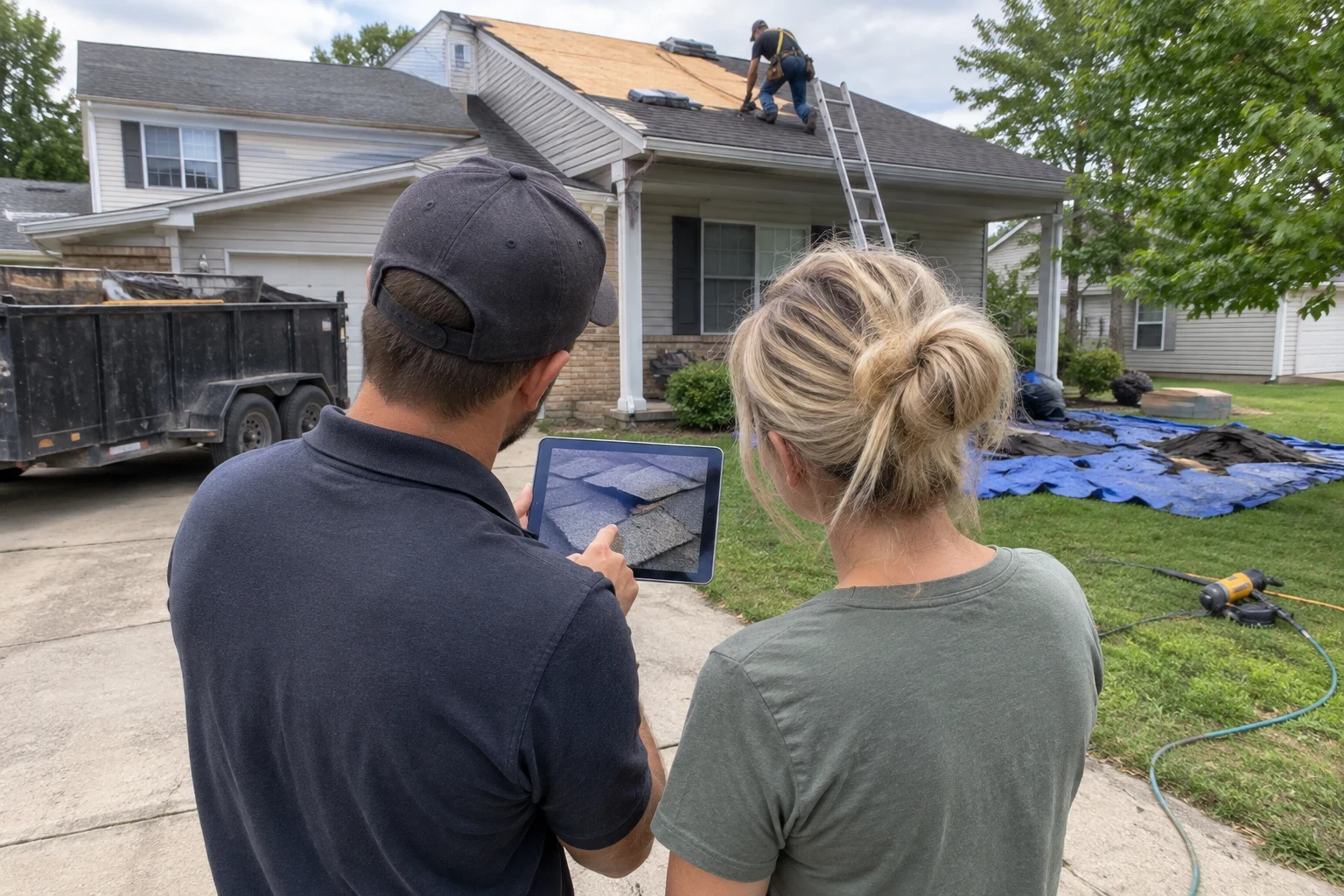
We start with a free roof inspection, looking at the roof edge, fascia, existing gutters and where water drains today. You get photos and a written estimate that lists each part of the job.
- 2
Your options, explained
We walk through gutter size, color, downspout placement and whether guards are worth adding to your home. If repair is the sensible answer, we say so.
- 3
Removal and prep
Old gutters come down carefully so the fascia and roof edge are not damaged. Any fascia repairs you approved are finished before new gutters are hung.
- 4
Forming and installation
Gutters are formed on site to exact lengths, hung on hidden hangers and pitched toward the downspouts. Corners and end caps are sealed, and downspouts are fastened and extended.
- 5
Water test and cleanup
We run water through the system to confirm it drains, then clear away old metal, fasteners and scraps from the yard and beds.
Straight Answers About Gutters
Is a new roof a good time to put on new gutters too?
In many cases it is. A roof replacement means the gutters have to come off and fresh drip edge goes along the eaves. If your current runs are aging, dented or made of many short pieces, handling both together spares you a second visit to the roof edge later.
What sets one-piece gutters apart from the sectional kind?
Sectional gutters come in short pieces joined about every ten feet, and every seam depends on sealant that hardens and cracks over the years. A one-piece run is formed on site from a single length of aluminum, so the only joints sit at the corners. You end up with fewer places to leak and a tidier line along the eave.
Are gutter guards worth adding?
It depends on the trees above your roof. Beneath maples or oaks, a well-made guard can cut down on cleanings considerably, although any guard still benefits from a periodic look. On a lot with little overhead cover, two cleanings a year may be the simpler route, and we will tell you if that is the case.
Do my gutters really need replacing, or can they be fixed?
Many can be fixed. A loose hanger, a corner that drips or a downspout bumped out of position are each separate, small repairs. We recommend new gutters only when runs are badly bent, rusted or corroded through, or too narrow for the water coming off your roof.
Can the right gutters prevent ice dams?
Properly sloped gutters drain instead of holding standing water, so less ice forms along the eaves. Most ice dams start with warm air leaking into the attic, though. That is why our inspection covers the roof and its ventilation, not just the gutters.
How do I know if a recent storm hurt my gutters?
Hail tends to dent aluminum troughs and downspouts, and high winds can pull runs loose from the fascia. We work with homeowners and insurance companies on storm damage claims. During a storm damage repair visit, we document gutter damage together with anything we find on the roof.
See What Your Gutters Are Telling You
We will look at your roof edge, gutters and drainage, then explain what we found and what each option would involve. No pressure, just a clear answer.